Arriving in a new country, or even a new province, means having to start from scratch: recreating friendships, finding an activity… It is not easy. The Union nationale métisse Saint-Joseph du Manitoba (UNMSJM) was keen to facilitate the integration of African women, but also to open them up to the wider Francophone community in Manitoba.
Paulette Duguay, president of the Union nationale métisse Saint-Joseph du Manitoba, remembers very well a twinning project initiated by the organization and carried out in partnership with other community organizations, including Accueil francophone: Métis and African Grandmothers. This project was carried out in two phases, in 2015-2016 and in 2018-2019.
The first component, Around the Tree of Life, led the participants, as well as their daughters and granddaughters, to engage in an intercultural dialogue and to exchange their traditional stories and experiences, within the framework of a sharing circle guided by an Aboriginal facilitator, Dolorès Contré Migwans.
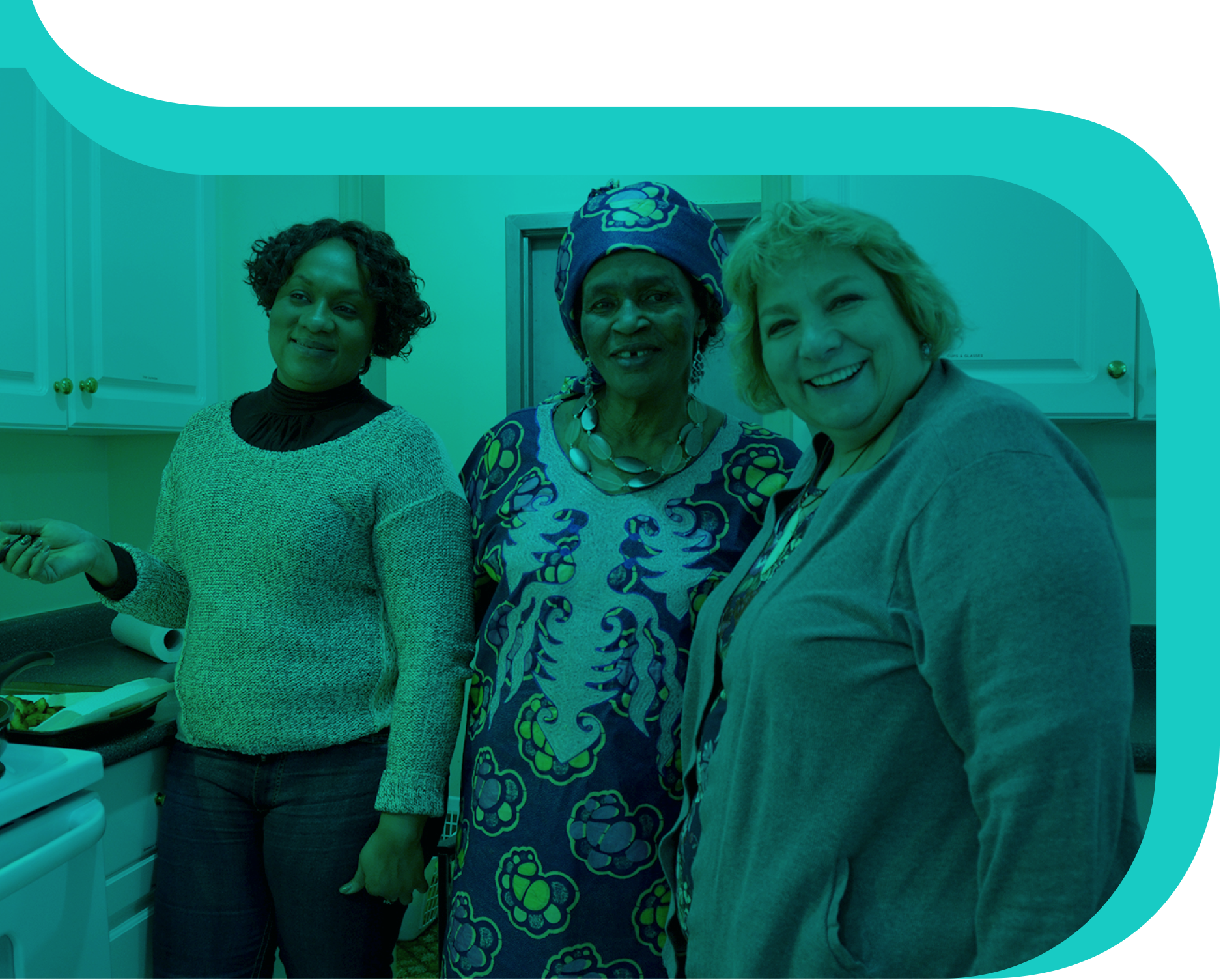
The second part, Return to the Tree of Life, brought them together to share a key element of each culture: culinary traditions. The participants cooked together and shared their recipes. These meetings led to the publication of a souvenir album of recipes and photos: Nos racines, nos recettes (Our Roots, Our Recipes).
“Historically, the Métis have always been welcoming to newcomers, says Paulette Duguay. When Lord Selkirk’s settlers arrived from Scotland by boat, they were not prepared for winter. It was the Métis who took them under their wing and saved their lives.
“In this same spirit of welcome, we saw at the UNMSJM that the African women who came to settle here sometimes had trouble integrating. Life goes too fast here, it is very different from what they knew before. So it was an opportunity to open up to them, to create connections to help them get to know French Manitoba better and integrate.”
This project not only allowed Métis women and African women, all Francophones, to get to know each other and create friendships, through dialogue around the tree of life or in the kitchen, but also to introduce the participating African women to rural Francophone Manitoba.
The President of the UNMSJM explains: “We were welcomed in the bilingual communities of Saint-Laurent and Saint-Pierre-Jolys to carry out this project. We were always very well received. There was a great openness, the people in the communities were very friendly, very supportive.”
The reception was coordinated by each rural community, in partnership with UNMSJM.
“For these African Francophone women who live all over Winnipeg, it was particularly significant: it was the first time they saw that there were Francophone communities outside of Winnipeg, and therefore French in all directions in the province!”
A Métis grandmother herself, Paulette Duguay also took advantage of the opportunity to create sincere friendships with these African women. Bonds that remain strong to this day.
“I invited them to my home. I remember they were embarrassed and stunned because they had never been invited to a white woman’s home since their arrival in Manitoba!
“We Métis have also experienced this inferiority shyness. I understand that. But once we got over the embarrassment, we had so much fun together! With COVID, I can’t invite them like I used to, but I miss them. I wish I could take care of them, spoil them.”
The grandmothers were not the only ones who gained long-term friendships from the experience.
Indeed, some grandmothers had brought their granddaughters, and two of them, French Canadian Christelle Cantin of Lorette and young Muslim Zenaba Barkai got along particularly well during the first part in 2015-2016. “They are still very close today,” says Paulette Duguay.
“See you next week for the final testimony of our series Stories about us. Stories that unite us.”